
Dog coats and raincoats: a UK buying guide
These are our top picks
Affiliate links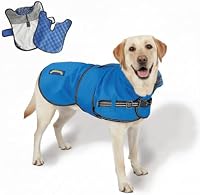
Waterproof shell over a fleece that unzips, so the same coat works in October and in January. The best rated of the lot.
View on Amazon
The light one for a wet spring walk. No lining, packs down small, right for a dog that runs hot.
View on Amazon
For a big dog who pulls. The harness is built in, so there is one thing to put on rather than two.
View on AmazonSome dogs need a coat. Most do not. The pet industry would prefer you did not know which category yours falls into, and the result is a great many labradors standing in the rain wearing a quilted gilet, looking faintly embarrassed.
This guide is about working out whether your dog is one of the ones that genuinely benefits, and then buying the right thing rather than the nicest looking thing.
Does your dog actually need a coat
Start here, because the honest answer for a lot of dogs is no.
Dogs that genuinely need one
- Thin-coated and single-coated breeds. Greyhounds, whippets, lurchers, Italian greyhounds, staffies, boxers, vizslas, dobermanns, dalmatians, and most short-haired terriers. They have no undercoat and very little body fat. A greyhound in a British January is genuinely cold, and it is not anthropomorphism to say so.
- Very small dogs. A high surface-area-to-body-mass ratio means small dogs lose heat fast. Chihuahuas, miniature dachshunds, toy breeds.
- Puppies. They regulate temperature poorly until they are a few months old.
- Older dogs. Reduced circulation, less muscle mass, often arthritic. Cold makes stiff joints worse, and a coat is a cheap intervention.
- Dogs recovering from illness, surgery or clipping. Obvious, but frequently overlooked.
- Any dog that visibly shivers, tucks its tail, hunches, or refuses to walk in cold or wet. Believe the dog rather than the breed chart.
Dogs that mostly do not
Double-coated breeds. Labradors, retrievers, huskies, German shepherds, collies, spaniels, malamutes, Newfoundlands, most northern breeds. They carry a dense insulating undercoat that traps warm air, and it works remarkably well. A coat on top of it can interfere with that layer rather than help it, and in a working dog it can cause overheating.
There is a caveat. A double-coated dog standing still in cold rain for a long period, at an agility show or on a boat, or an older double-coated dog with a thinning coat, may still benefit. The rule is about typical use, not every situation.
The four types
Waterproof raincoat
The workhorse for a British winter. The point is not warmth, it is keeping the dog dry, and a dry dog stays far warmer than a wet one regardless of coat type.
Look for: a genuine waterproof rating rather than "water resistant", full belly coverage if your dog is low to the ground, and a lining that does not soak up water.
Best for: almost every dog that needs anything at all, in the UK, most of the year.
Insulated winter coat
Padded or fleece-lined, for genuine cold rather than rain. Many combine a waterproof shell with an insulated lining, which is usually the sensible single purchase.
Best for: thin-coated breeds, seniors, small dogs, hard frosts.
Fleece or jumper
Not waterproof, not windproof. A warm layer for indoors, for the car, or under a waterproof shell.
Best for: greyhounds and whippets at home, older dogs, and as a base layer. Not a substitute for a raincoat.
Drying coat
The most underrated item in the category and the one almost nobody buys. A thick microfibre or towelling robe you put on after a wet walk. It wicks water out of the coat, so your dog dries in twenty minutes rather than two hours, and it does not shake water across your kitchen.
Best for: any dog that swims, any long-coated dog, and anyone tired of a damp dog smell in the house. Buy one. You will not regret it.
Measuring properly
Dog coat sizing is chaotic and inconsistent between brands. Never buy on breed. Take three measurements with your dog standing squarely.
- Back length. The critical one. Base of the neck, where a collar sits, to the base of the tail. Not to the tip.
- Chest girth. Around the widest part of the ribcage, just behind the front legs.
- Neck girth. Where a collar would sit.
If your dog falls between sizes, prioritise the back length. A coat that is too long restricts the back legs and interferes with toileting, which is the single most common complaint about ill-fitting coats. A coat that is slightly loose on the chest can usually be adjusted. One that is too long cannot be shortened.
What to look for
- Full belly coverage, if your dog is low to the ground. A dachshund's underside gets wetter than its back. Half the point of the coat is missed by a cape that only covers the spine.
- A harness opening. A slot in the back so a harness underneath can be clipped through. Without it you have to choose between the coat and the harness, and one of them is a safety item.
- Adjustable straps, ideally at both chest and belly, so it does not rotate as the dog moves.
- Reflective panels or piping. Half the UK walking year is in the dark. Do not treat this as decoration.
- A high collar or neck cover, for thin-coated breeds. The chest and throat lose a lot of heat.
- Leg straps rather than a simple belly flap, on anything that runs. Belly flaps ride up. Leg straps do not.
- Machine washable. Assume it will need washing weekly.
What to avoid
- Anything that restricts the shoulders. Watch your dog walk in it. If the front legs cannot reach forward normally, the coat is wrong, however well it fits everywhere else.
- Coats with no harness opening, unless you walk on a collar, which you should not be doing on a puller.
- Hoods. Almost universally hated by dogs, and they impair hearing and peripheral vision, which matters near roads.
- Leaving a wet coat on indoors. A damp coat trapped against the skin causes hot spots and irritation. Coat off and dried on return.
- Costumes. Your dog does not want to be a hot dog. It is not a matter of opinion.
Common questions
At what temperature does a dog need a coat?
There is no single threshold, because it depends entirely on coat type, size, age and weight. As a rough guide, thin-coated and small dogs start to feel it below about 7 degrees, and most will need something below 4. Double-coated breeds are comfortable far lower. Wind and rain matter more than the number on the thermometer.
Can my dog sleep in a coat?
No. Take it off indoors. A dog that needs a coat to be warm inside your house needs the heating on, a warmer bed, or a vet check, not a permanent jacket. A coat worn constantly causes matting, overheating and skin problems.
Do dog coats really keep them dry?
A good waterproof keeps the back, sides and belly dry. Legs, head and tail will still get wet, and no coat changes that. What you are avoiding is a soaked, chilled dog and a two-hour dry-out, not a completely dry dog.
Is a jumper enough in winter?
Only if it is dry. A fleece in the rain becomes a cold wet sponge held against your dog. In British weather a waterproof outer layer does more than an insulated one.
What we would do
Work out honestly whether your dog needs anything at all. If they do, buy one good waterproof with a fleece lining, full belly coverage, a harness opening, adjustable straps and reflective panels. Measure the back length and prioritise it over everything else. Then buy a drying coat, because it is the item that will change your life more than the one your dog wears outside.
Getting a puppy?
Our free checklist covers what to buy before they come home, what can wait, and the things almost everyone wastes money on. No fluff, no filler.
Get the free checklist